Home > About RRWC
About RRWC
The River Rival Wrestling Club (RRWC) is a non-profit organization founded to teach the sport of wrestling to youth in the towns of Amesbury, Georgetown, Groveland, Merrimac, Newbury, Newburyport, Rowley, West Newbury, Salisbury and surrounding areas.
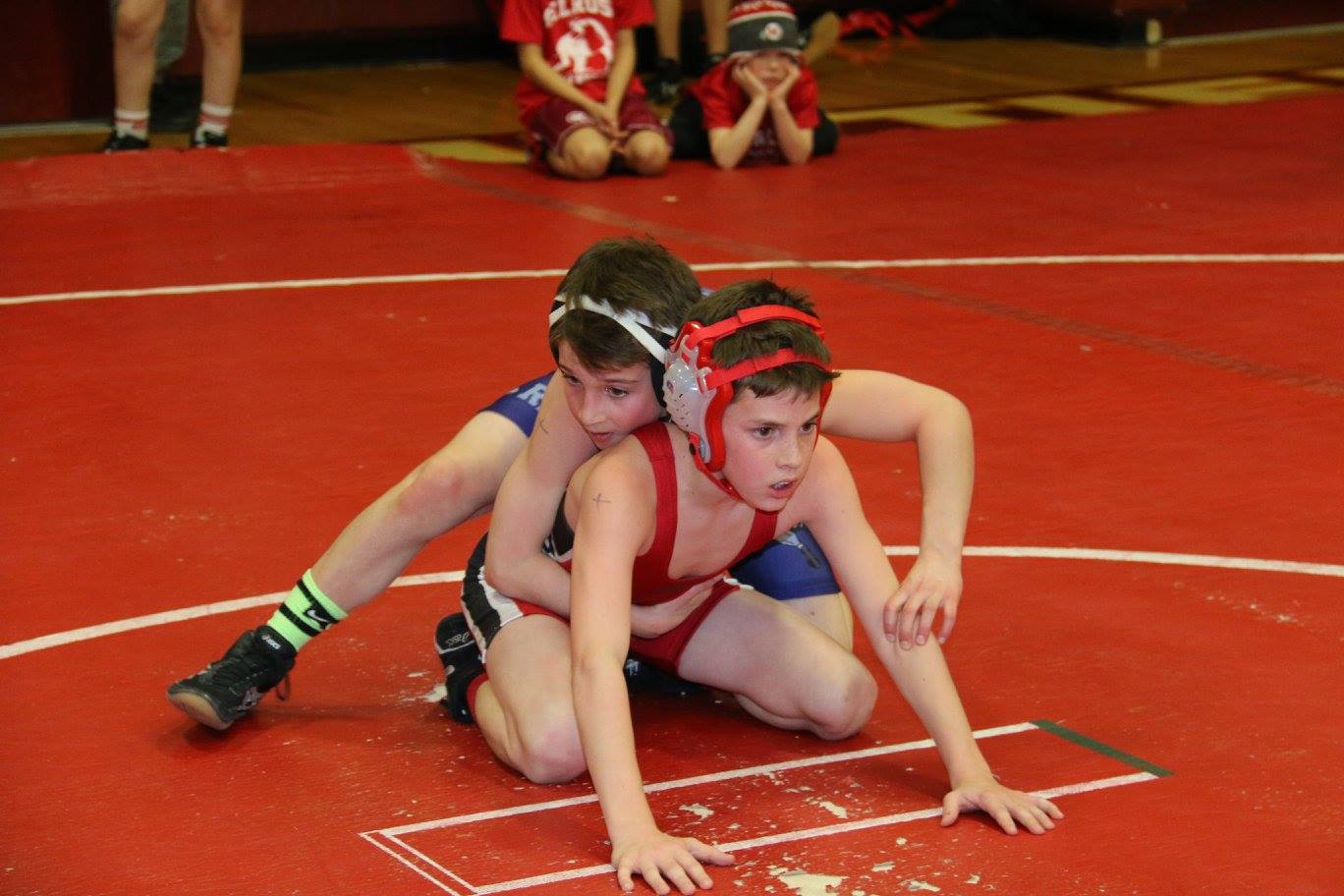
RRWC seeks to introduce the sport of amateur folkstyle wrestling to students in grades 1 through 8. Our volunteer coaches work with boys and girls to teach the rules, moves, strategies and tactics needed to compete in local and regional wrestling events.
Our Coaches

Gabriel Kasper
Wrestling Experience:
Otter Valley Union High School, VT
Years with RRWC: 12
Favorite Wrestling Move:
Crossface
Why Wrestle:
A big part of what wrestling gave me was exposure to positive role models. Through my years of wrestling, I was given the chance to learn hard work and perseverance physically and mentally. I learned how to set goals for myself and put a plan in place to achieve those goals.
Probably the most important thing wrestling has taught me is how to deal with adversity. Learning at a young age that falling short after giving your best effort is a chance to learn and improve has been an invaluable life lesson for me.

Scott Yewell
Wrestling Experience:
Cornell University, NY
Years with RRWC: 12
Favorite Wrestling Move:
Front Head Lock
Why Wrestle:
Wrestling is awesome. It's a whole-body experience — not just physical, but an education in focus, self-discipline, and personal achievement.
It takes discipline to build your endurance, learn moves, and put together strategies. And because it's an individual sport, the results are yours alone. When you win, it's all you. When you lose, it's all you too.
That kind of accountability is rare — and it builds character that carries into everything else. But you're never in it alone. Your team is always there to help you get better.

Sean Horgan
Wrestling Experience:
TBD
Years with RRWC: 5
Favorite Wrestling Move:
TBD
Why Wrestle:
TBD

Nick Lussier
Wrestling Experience:
TBD
Years with RRWC: 4
Favorite Wrestling Move:
TBD
Why Wrestle:
TBD

Jon Cain-Saunders
Wrestling Experience:
TBD
Years with RRWC: 3
Favorite Wrestling Move:
TBD
Why Wrestle:
TBD

Jarrod Fuller
Wrestling Experience:
TBD
Years with RRWC: 3
Favorite Wrestling Move:
TBD
Why Wrestle:
TBD

Adam Oulette
Wrestling Experience:
TBD
Years with RRWC: 2
Favorite Wrestling Move:
TBD
Why Wrestle:
TBD

Seth Latrell
Wrestling Experience:
TBD
Years with RRWC: 1
Favorite Wrestling Move:
TBD
Why Wrestle:
TBD

Paul Hughes
Wrestling Experience:
Michigan State University, MI
Years with RRWC: 12
Favorite Wrestling Move:
All of them
Frequently Asked Questions
What towns can participate in RRWC?
We welcome wrestlers from the towns of Amesbury, Georgetown, Groveland, Merrimac, Newbury, Newburyport, Rowley, Salisbury, West Newbury and surrounding areas. If you live in a neighboring town, feel free to reach out to us to inquire.
Is wrestling only for boys?
No! Women's wrestling has been an Olympic sport since 2004, and women's wrestling is one of the fastest-growing parts of the sport.
At RRWC, we are committed to coaching all genders in the sport of wrestling.
What equipment does a wrestler need?
Wrestling Shoes – Wrestling shoes offer more ankle support than traditional shoes and are designed to be lightweight and tight to the foot, which allows freedom of movement. Street shoes aren't allowed on the mat because they can tear or damage it, and mats are expensive. You can find wrestling shoes at Dick's, Amazon, and other sport equipment retail outlets for less than $50. Contact us if you have any questions about sizing adult/child wrestling shoes.
Practice Clothes – T-shirt and gym shorts are standard for wrestling practices. Competitions may require wrestling singlets, which the club will provide.
Headgear – Highly recommended for all mat practice and required for competitions. Headgear can prevent outer ear injuries and bruises during practice and competitions.
Mouthguard – For any wrestler with recent dental work on the outside of their teeth, mouthguards are recommended for practice and mandatory for competitions. If there is metal dental work on the upper and lower teeth, then the mouthguard must cover both the upper and lower teeth. A moldable mouthguard is recommended.
What do wrestlers learn at wrestling practice?
At RRWC, we try to make practices educational and fun. Each practice includes warm-ups and stretching, tactical instruction, functional drills, live wrestling, and usually a game or two. We welcome complete novices through intermediate wrestlers, and match wrestlers with partners of appropriate size and skill. Club members will learn:
- The rules of scoring
- Effective takedowns like double-leg and single-leg takedowns
- Pinning combinations like the far-side, spin and half nelson
- Mat wrestling escape moves like the inside standup and sit out
Can my child get hurt wrestling?
Like soccer, basketball, hockey or any other youth sport, wrestling is a physical sport, and injuries do happen. At RRWC, we do our best to teach and enforce safe wrestling practices. Our coaches are attentive during drills and live wrestling to avoid potentially dangerous activity by wrestlers.
Do wrestlers have to lose weight?
No. The sport of wrestling relies on the concept of weight classes to allow wrestlers of similar sizes to compete. At RRWC, as a youth-focused program, we do not suggest any sort of weight management for wrestlers to target specific weight classes (i.e. no "weight cutting").
What are weight classes?
One of the best things about wrestling is that it welcomes kids of all shapes and sizes. Size gives every wrestler different advantages and challenges, so wrestling uses weight classes to match each wrestler against an opponent of similar size and ability, competing at their natural weight.
The Massachusetts Wrestling Association, the USA Wrestling state affiliate, publishes the weight classes for each age group on its tournament pages: 6U, 8U and 10U and 12U and 15U.
A weight class is named for its upper limit. In the 12U classes, for example, a wrestler in the 86 lb class weighed more than 81 lbs and no more than 86 lbs at the competition weigh-in.
Tournament organizers sometimes combine weight classes to even out the number of wrestlers in each group. For example, if 24 wrestlers weigh in at 100 to 105 pounds, five at 98 to 99 pounds, and three at 106 pounds, the pairing officials may split those 32 wrestlers into three groups of similar size instead of leaving the lighter five and heavier three with too few opponents.